CISSP Certification Guide 2026: Requirements, Exam, Salary & Training
CISSP Certification Guide 2026: Requirements, Exam, Salary & Training

Manoj Sharma
Founder & Lead Coach · CISSP, CCSP, CISM, CRISC
Quick Answer
What is CISSP certification, and what are the requirements, exam format and salary in 2026?
CISSP (Certified Information Systems Security Professional) is a globally recognized cybersecurity certification from ISC2, validating expertise across eight domains: Security and Risk Management (16%), Asset Security (10%), Security Architecture and Engineering (13%), Communication and Network Security (13%), Identity and Access Management (13%), Security Assessment and Testing (12%), Security Operations (13%), and Software Development Security (10%). Requirements: five years of paid experience in two-plus domains (one-year waiver for a degree or approved credential), a CAT exam of 100–150 questions in up to 3 hours scored 700/1000 (a scaled score, not 70%), an ISC2 endorsement, and 120 CPE credits over three years. The registration fee is USD 749. Passing without experience makes you an Associate of ISC2. In 2026, US CISSP salaries typically run $120,000–$170,000 and India averages ₹18–25 LPA. Cybernous, led by instructor Manoj Sharma, coaches CISSP with a 100-day mentored program and a 98.3% organisational CISSP first-attempt pass rate.
The Certified Information Systems Security Professional (CISSP) is one of the most respected and sought-after credentials in cybersecurity. As the threat landscape grows more complex, organizations increasingly look for experts who can design, manage and protect information systems at a strategic level — and CISSP is the credential that signals exactly that capability.
This guide walks you through everything you need to know about CISSP in 2026: what it is, the eight domains and their exam weights, eligibility requirements, the exam format, realistic salary expectations in the US and India, and how the right online training helps you pass on your first attempt. Let's get into it.
What Is CISSP Certification?
CISSP is a globally recognized certification offered by ISC2, a nonprofit specializing in cybersecurity education and certifications. It validates your knowledge and experience across multiple security domains, demonstrating your ability to design, implement and manage a secure enterprise. To earn it, you pass a rigorous exam covering eight domains, each critical to securing modern IT infrastructures.
CISSP is built for experienced professionals moving into information security management, security architecture, or senior analysis and leadership roles. It is deliberately broad and management-oriented — it certifies that you can lead a security program, not just operate a single tool. That breadth is exactly why it is respected, and why it is hard.
The 8 CISSP Domains and Their 2026 Exam Weights
The CISSP Common Body of Knowledge (CBK) is divided into eight domains. Knowing their relative weighting matters, because it tells you where to concentrate your study time. These are the current weights in effect for 2026.
| # | Domain | Exam Weight |
|---|---|---|
| 1 | Security and Risk Management | 16% |
| 2 | Asset Security | 10% |
| 3 | Security Architecture and Engineering | 13% |
| 4 | Communication and Network Security | 13% |
| 5 | Identity and Access Management (IAM) | 13% |
| 6 | Security Assessment and Testing | 12% |
| 7 | Security Operations | 13% |
| 8 | Software Development Security | 10% |
Domain 1, Security and Risk Management, carries the most weight — and it is also the conceptual backbone of the whole exam. Risk, governance and the "think like a manager" mindset thread through every other domain, which is why strong candidates master Domain 1 first.
Why Pursue CISSP Certification?
Industry Recognition
CISSP is widely regarded as one of the most prestigious cybersecurity certifications in the world. Holding it signals to employers and peers that you have the expertise to manage complex security challenges and lead an information security program.
Higher Salary Potential
CISSP-certified professionals consistently earn more than their non-certified peers, and the credential regularly ranks among the highest-paying in all of IT. Demand spans finance, healthcare, government and technology — making it a high-return career investment. (See the salary section below for current 2026 figures.)
Career Advancement
CISSP opens doors to senior and leadership roles, including Security Consultant, Senior Security Analyst, IT Auditor, Security Architect, and ultimately Chief Information Security Officer (CISO). It demonstrates commitment, credibility and readiness for leadership.
Expert-Level Knowledge
Beyond the title, CISSP builds genuine depth across governance, risk management, network security and incident response. That breadth sharpens your decision-making and operational effectiveness in real-world environments — the knowledge outlasts the exam.
CISSP Salary in 2026
Salary is one of the main reasons professionals pursue CISSP, and the numbers back up the investment. Figures vary by role, experience, location and source, but here are approximate 2026 ranges from current salary reports and the ISC2 Workforce Study.
| Region | Typical CISSP Salary Range (2026) |
|---|---|
| United States | $120,000 – $170,000 (avg often cited ~$120k–$150k) |
| India | ₹18 – 25 LPA average (freshers ~₹9–10 LPA, senior ₹35 LPA+) |
| UK | ~£82,000 (~$104,000) median |
| Australia / Canada | ~$90,000 – $130,000 (USD equivalent) |
| Associate of ISC2 (pre-experience) | ~$88,000 – $108,000 in the US |
Two things drive where you land on the curve. First, management exposure: the same certification can mean a $110,000 analyst role or a $300,000+ CISO seat, and the differentiator is leadership experience more than technical depth. Second, location: high-cost US metros and markets like Switzerland and the UAE pay a premium, while emerging markets still show a large local premium for the credential.
The salary bump is not just the day-one raise. CISSP accelerates promotions and qualifies you for roles that require the credential outright — and governance, risk and compliance work is among the least exposed to AI automation because it demands accountable human judgment. That is a durable career hedge, not just a pay rise.
CISSP Eligibility and How to Earn It
Earning CISSP involves more than passing an exam. Here is the full path.
Experience Requirement
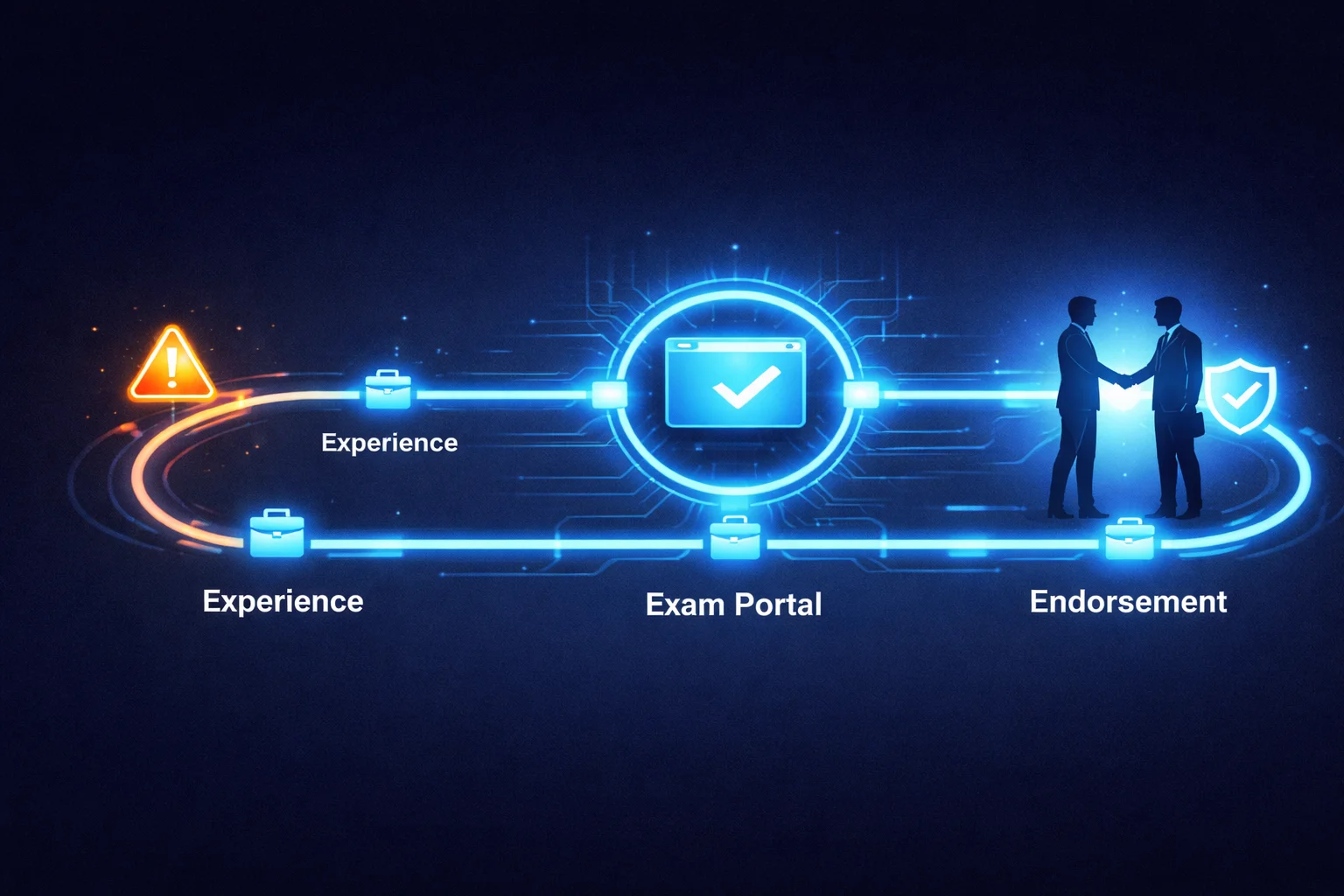
You need a minimum of five years of cumulative, paid work experience in at least two of the eight CISSP domains. A one-year waiver is available if you hold an approved credential or a relevant four-year degree, reducing the requirement to four years.
You can still take and pass the exam without the experience. Do so, and you become an Associate of ISC2, with six years to earn the required experience and convert to full CISSP. Many professionals sit the exam early while their knowledge is fresh and accrue experience afterward. Note that ISC2 periodically updates its list of credentials that qualify for the one-year waiver, so verify current eligibility on the official ISC2 site.
Pass the CISSP Exam
The English CISSP exam is Computer Adaptive Testing (CAT): between 100 and 150 questions, up to 3 hours, with a passing standard of 700 out of 1000. The registration fee is USD 749 (verify current pricing on ISC2). Because it is adaptive, the exam gets harder as you answer correctly and can end as soon as it has statistically determined a pass or fail — sometimes at question 100.
A frequent misconception is that you need 70% to pass. You do not. The 700 out of 1000 is a scaled score, not a raw percentage — question difficulty is weighted, so a straightforward correct answer and a hard one are not worth the same. Chasing "70% on practice tests" is the wrong target. Aim instead for consistent conceptual understanding across all eight domains.
Endorsement
After passing, you must be endorsed by an ISC2-certified professional who attests to your work experience. You have nine months from your exam date to complete the endorsement application.
Ongoing Education (CPE)
CISSP is not "earn once and forget." You must maintain 120 Continuing Professional Education (CPE) credits over three years (and pay an annual maintenance fee) to keep the certification active and current with evolving threats.
CISSP Training Online: A Smart Way to Prepare
Preparing for CISSP is demanding, but quality online training offers flexibility and structured guidance that self-study alone rarely matches.
- Self-paced learning: study around work, family and other commitments
- Comprehensive coverage: all eight domains via video, interactive modules and practice exams
- Access to expert instructors: trainers who clarify concepts, share exam strategy and resolve doubts
- Cost-effective: typically more affordable than in-person bootcamps
- Global accessibility: learn from anywhere, with no travel or location barriers
Self-Study vs Bootcamp vs Mentored Program
Not all preparation is equal. Here is an honest comparison of the three common routes.
| Approach | Strengths | Limitations |
|---|---|---|
| Self-Study | Low cost, flexible | Time-consuming, easy to misread complex concepts, weak for adaptive-exam practice |
| Bootcamp | Fast, immersive (40–60 hrs) | Too short to absorb the breadth; high pressure; little ongoing support |
| Mentored Program | Structured plan, live practice, 1:1 guidance, exam-technique coaching | Requires consistent daily commitment |
This is where a mentored, end-to-end program earns its value. The Cybernous CISSP Success Toolkit, for example, runs a structured 100-day plan with 60+ hours of live exam practice, 1:1 mentoring and 5500+ practice questions — designed so you build genuine understanding rather than cram facts.
Memorising facts instead of learning to think like a manager. CISSP rarely asks "what is X?" It asks "what should you do first?" or "what is the best response?" Candidates who drill definitions but never practise risk-based, management-level decision-making walk in prepared for the wrong exam. Train your judgment, not just your memory.
Tips to Pass the CISSP Exam
- Study consistently: daily focused time beats weekend marathons; work through each domain methodically
- Use multiple resources: combine training with the official guide, practice exams and study groups
- Practise with quality questions: adaptive-style questions reveal weak areas and build exam stamina
- Master Domain 1 first: risk and governance concepts underpin every other domain
- Think like a manager: for every scenario, ask what a security leader would prioritise
- Stay updated: follow current threats and best practices through blogs, webinars and industry news
Pass CISSP on Your First Attempt
The Cybernous CISSP Success Toolkit is a mentored 100-day program built around the "think like a manager" method — 60+ hours of live practice, 5500+ questions, and 1:1 coaching from Manoj Sharma. 2,000+ certified across 40+ countries, 98.3% organisational CISSP first-attempt pass rate.
Explore the CISSP Success Toolkit →
Conclusion: Is CISSP Worth It?
For cybersecurity professionals seeking leadership roles, higher salaries and global recognition, CISSP is a career-defining credential. It is genuinely hard — but that difficulty is exactly what makes it valuable. With the right preparation, you can master the eight domains, pass with confidence, and unlock a tier of opportunities that stays out of reach for uncertified peers.
As the cybersecurity industry keeps expanding and security roles remain among the least automatable in tech, CISSP helps you stand out, future-proof your career, and step into advanced professional opportunities. If you are serious about a long-term security leadership career, it is one of the smartest investments you can make.
Continue Reading
- How difficult is the CISSP exam in 2026?
- The 100-day CISSP preparation roadmap
- CISSP vs CISM: which certification is right for you?
- Top 10 benefits of CISSP certification
- The CISSP Success Toolkit — Mission CISSP 100 Days
- Free CISSP practice questions
- Read the CISSP Code Breaker free
- Meet your coach, Manoj Sharma
- Read verified CISSP success stories
- Book a free 20-minute strategy call
Frequently Asked Questions
You might also like


Ready to accelerate your certification journey?
Join Cybernous' structured programme with live mentoring, hands-on practice, and a proven track record.