CISM: The Smart Cybersecurity Move Beyond Just Tech

CISM: The Smart Cybersecurity Move Beyond Just Tech

Manoj Sharma
Founder & Lead Coach · CISSP, CCSP, CISM, CRISC
Quick Answer
What is CISM certification and who is it for?
CISM (Certified Information Security Manager), from ISACA, is a leadership certification for professionals who manage and govern information security rather than configure it. It validates the ability to build and run a security programme, manage risk, and align security with business goals. It suits experienced professionals moving from technical roles into management, GRC, consulting, or CISO tracks — not beginners. The current exam has 150 questions over 4 hours across 4 domains; ISACA updates the exam content outline on 3 November 2026.
Let's face it — cybersecurity is crowded with certifications. Everyone is stacking acronyms. But if your goal is to move beyond pure technical roles into leadership, there is one certification that stands out quietly, yet powerfully: CISM.
CISM is for the professional who wants to stop being "the person who fixes issues" and start being the person who prevents them strategically, communicates risk clearly, and leads when things go wrong. That is a different job — and it needs a different kind of proof.
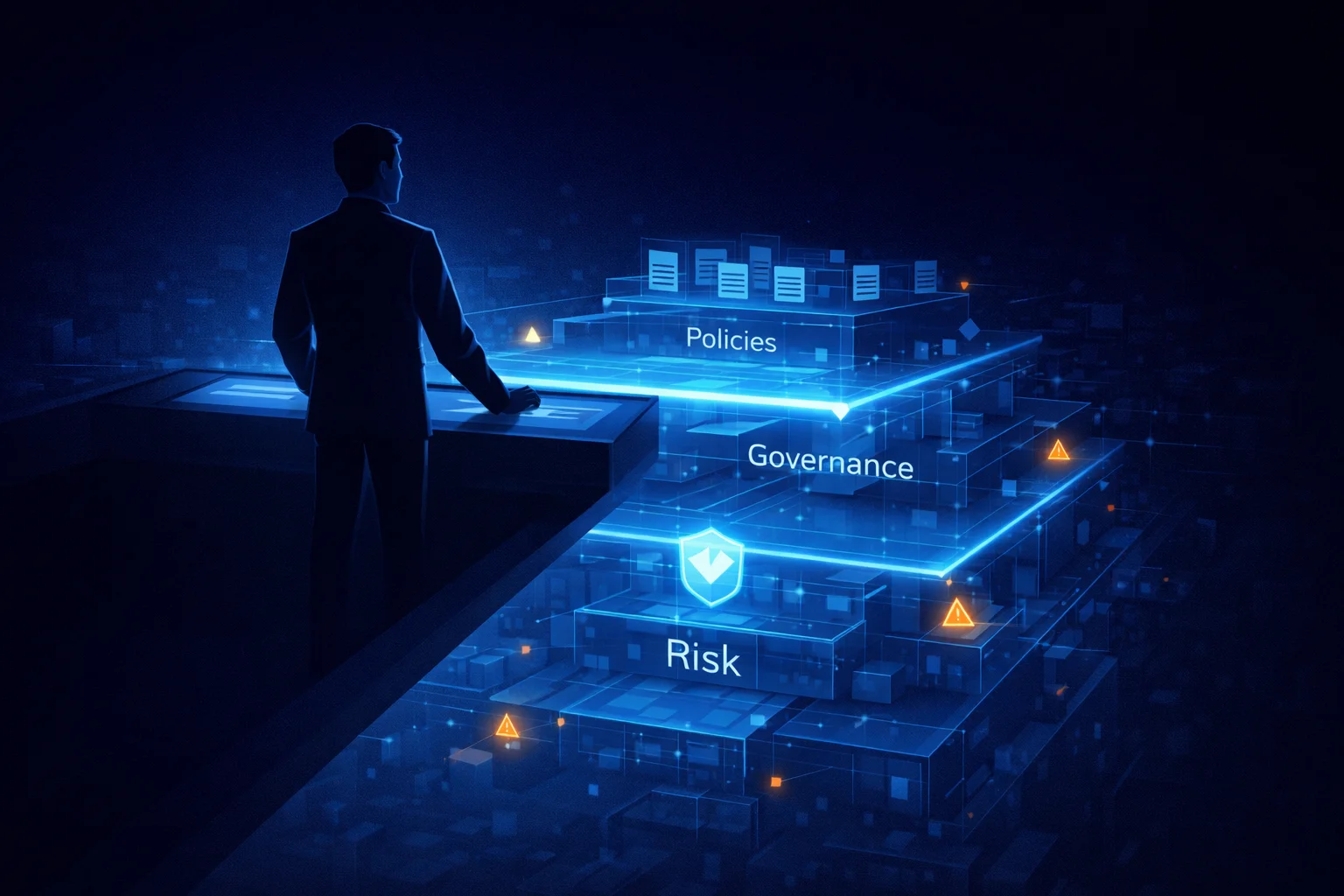
Tools change. Titles change. But governance, risk, and decision-making is what separates a technician from a leader. CISM certifies that shift — the move from doing the work to directing it.
What is CISM, really?
CISM stands for Certified Information Security Manager, offered by ISACA. It is not about configuring firewalls or writing code. CISM is about building and leading an information security programme, managing risk, and aligning security with the goals of the business.
In plain terms: CISM is for the professional who wants to become the security decision-maker — the one in the room when the organisation decides how much risk it will accept and what it will spend to manage it. It has been earned by more than 107,000 people since it launched in 2002, and it is consistently treated as a gold standard for security management roles.
Why does CISM matter more than ever?
Companies no longer just want people who can detect threats. They want people who can prevent them strategically, explain risk in business language, and lead teams when an incident hits. That is exactly what CISM trains you to do.
Across its four domains, CISM teaches you to:
- Build and manage security governance — the structure that makes security a business function, not a fire brigade.
- Evaluate and prioritise business risk, and decide what to treat, transfer, accept, or avoid.
- Create a long-term, scalable security programme rather than a pile of disconnected controls.
- Direct corrective action and lead incident response when something goes wrong.
Most certifications go deep into the "how." CISM goes deep into the "why" and the "what next." That is the leadership shift, and it is why the credential has aged so well as security has become a boardroom concern.
Who should take the CISM certification?
Let's be real — CISM is not for freshers. It is built for professionals who already have experience and are now asking bigger questions:
- "How do I move into GRC or consulting?"
- "How do I step up from analyst to manager?"
- "How do I design strategy instead of just following it?"
If that sounds like you, CISM is worth the time and the money. And here is the part most people get wrong: the experience requirement does not have to come before the exam.
To be certified, ISACA asks for five years of information security work experience, including at least three years in security management across three or more of the four domains. Up to two years of the general experience can be waived if you already hold a credential like CISSP or CISA, or a relevant degree — but the three years of management experience can never be waived. Crucially, you are allowed to sit and pass the exam first, then submit your qualifying experience within five years.
Do not wait until you have logged all five years before you book the exam. Passing first is a legitimate, common route — you lock in the achievement, then document the experience within five years. Waiting "until you're fully eligible" just delays your career move for no good reason.
What is the CISM exam format?
The current CISM exam is 150 multiple-choice questions, completed in 4 hours, spread across four domains. It is scored on a scaled range of 200 to 800, and the passing score is 450 — a scaled score, not a simple percentage, so ISACA accounts for question difficulty rather than counting raw correct answers.
Here is how the four domains are weighted on the current outline:
| Domain | Focus | Weight |
|---|---|---|
| 1. Information Security Governance | Strategy, frameworks, alignment with the business | 17% |
| 2. Information Security Risk Management | Assessing and treating risk | 20% |
| 3. Information Security Programme | Building and running the security programme | 33% |
| 4. Incident Management | Response, recovery, and resilience | 30% |
Notice that Domains 3 and 4 together are 63% of the exam. If you study every domain equally, you have already mis-allocated your time — weight your preparation the way ISACA weights the exam.
ISACA updates the CISM Exam Content Outline on 3 November 2026, adding enterprise architecture and information security architecture content and leaning harder into security strategy and programme development. Updated official study materials start releasing from 1 September 2026. Testing before 3 November? Current materials are fully valid. Testing after? Make sure your prep is aligned to the new outline. Exact new domain weightings had not been officially published at the time of writing — treat any precise new percentages you see elsewhere as estimates.
"But why CISM? I've heard of CISSP too…"
This is the most common question I get, so let me make the difference simple. CISSP (from ISC2) is broad — technical and management, across eight domains. It is the certification for the person who wants to be a deeply capable engineer or architect leader. CISM (from ISACA) is narrower but laser-focused — governance, risk, and leadership for managers, consultants, and CISOs.
If CISSP trains you to be the go-to expert, CISM prepares you to make the big security decisions. Not "better" — just better aligned with leadership roles.
| CISSP | CISM | |
|---|---|---|
| Body | ISC2 | ISACA |
| Emphasis | Broad: technical + management | Focused: management + governance |
| Scope | 8 domains | 4 domains |
| Best for | Architect / engineer leaders, security generalists | Managers, consultants, GRC, CISO track |
| The question it answers | "Can you be the expert?" | "Can you make the decisions?" |
Worth knowing: the two reinforce each other. Holding CISSP earns you a two-year experience waiver toward CISM, which is why so many professionals pick up both over a career. If you want the full comparison, our complete CISSP certification guide goes deeper.
Don't agonise over "CISSP or CISM" as if it's permanent. Pick the one that matches the role you want next. If you are moving into management now, CISM is the sharper signal. You can add the other later — and many strong leaders do exactly that.
What are the real-world benefits of doing CISM?
Once you complete CISM and apply it, here is what actually changes:
- You are seen as a decision-maker, not just an executor.
- You can talk to management confidently and defend your recommendations in business terms.
- You become eligible for roles like security manager, risk consultant, CISO support, and advisor.
- Your earning potential rises — in India and globally.
On pay: reported figures vary by source and seniority, but CISM-linked salaries in India commonly sit in the mid-to-high range for security-management roles, with widely cited averages roughly in the region of ₹19–26 lakh a year and senior or CISO-track roles going higher; many sources report a meaningful uplift versus non-certified peers. Treat any single number as indicative — the certificate does not pay you, the role it helps you reach does. For the wider picture, see our roundup of the highest-paying cybersecurity jobs in India.
For a fuller breakdown of the career upside, our companion pieces on why earn CISM and five reasons to get CISM certified in 2026 lay out the case in detail.
CISM at Cybernous: why it's different
Many training providers "cover the syllabus" and stop there. That does not build leaders.
Cybernous focuses on exam readiness and real-world leadership confidence — so you don't just pass, you learn to think like a security manager: risk-first, business-aligned, and execution-ready. If you have moved up the ladder from a role like a SOC analyst, this is the bridge from operating security to directing it.
That approach is not a slogan. The same risk-first coaching method behind our 98.3% organisational CISSP first-attempt pass rate across our CISSP programme is what we bring to CISM — understand the why, rehearse the manager's decision, and the exam stops feeling like a memory test.
Conclusion
CISM doesn't teach you how to configure a tool — it teaches you how to think, lead, and protect the business. If you are ready to stop being the person who only fixes issues and become the person who prevents them strategically, CISM is a smart move.
With the right preparation and mindset, CISM can unlock new leadership roles and long-term career growth — and with the exam outline updating on 3 November 2026, the professionals who plan their timing now are the ones who move cleanly, without surprises.
Ready to Move From Doing to Directing?
The Cybernous CISM Success Toolkit is built for exactly this shift — exam readiness plus the manager's mindset, so you pass and lead. 2,000+ certified across 40+ countries, 98.3% organisational CISSP first-attempt pass rate.
Get the CISM Success Toolkit →
Continue Reading
- Top benefits of earning the CISM certification
- 5 powerful reasons to get CISM certified in 2026
- The complete guide to CISSP certification
- Top 10 benefits of CISSP certification
- Highest-paying cybersecurity jobs in India (2026)
- How to start your career as a SOC analyst
- The CISM Success Toolkit — governance-first coaching
- Read the CISSP Code Breaker free
- Meet your coach, Manoj Sharma
- Book a free 20-minute strategy call
Frequently Asked Questions
You might also like


Ready to accelerate your certification journey?
Join Cybernous' structured programme with live mentoring, hands-on practice, and a proven track record.