CISSP vs CISM 2026: Which Cybersecurity Certification Is Right for Your Career?
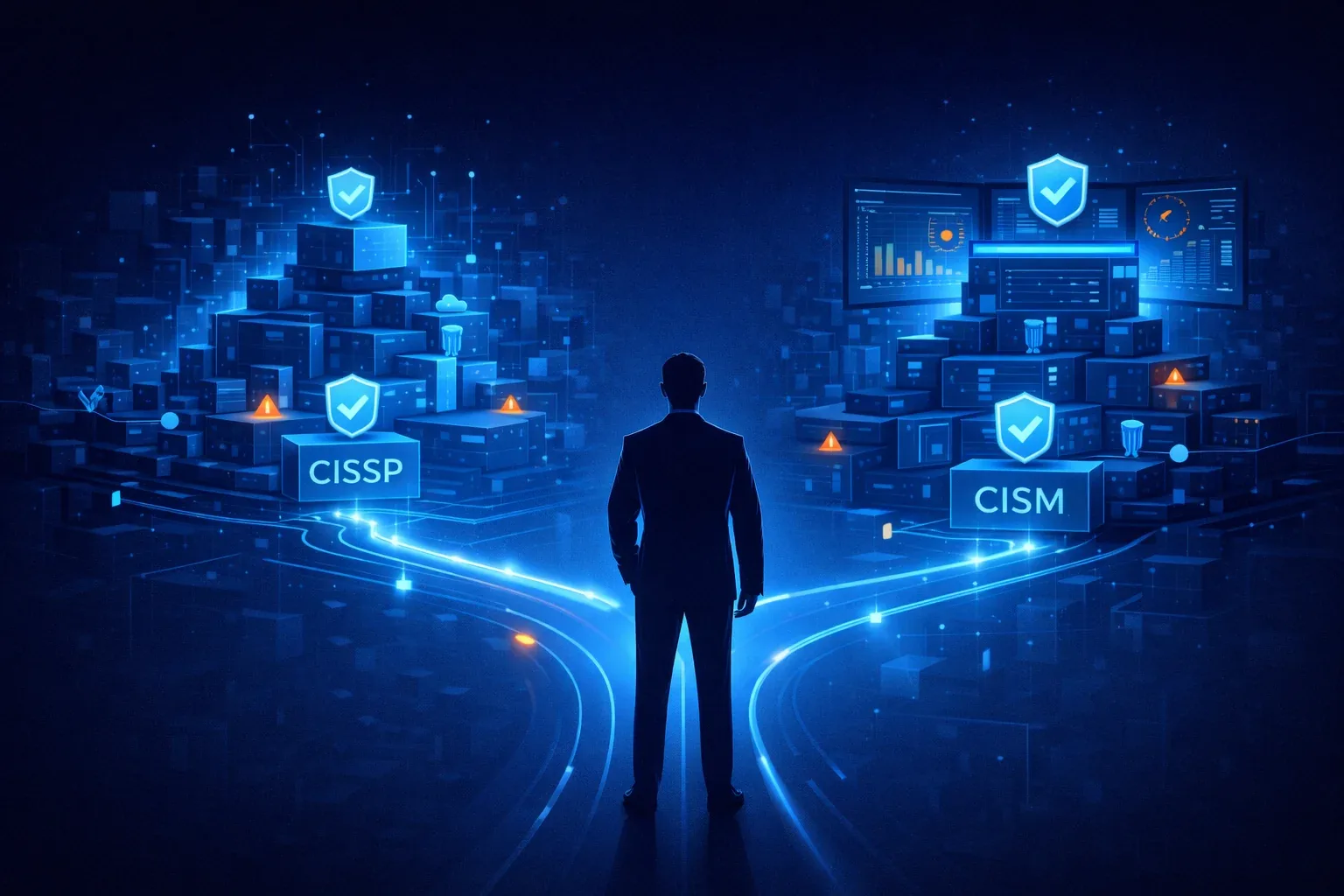
CISSP vs CISM 2026: Which Cybersecurity Certification Is Right for Your Career?

Manoj Sharma
Founder & Lead Coach · CISSP, CCSP, CISM, CRISC
Quick Answer
What is the difference between CISSP and CISM, and which certification should you choose?
CISSP and CISM are both globally recognized cybersecurity certifications, but they serve different professional goals. CISSP is designed for experienced cybersecurity professionals who want a broad and deep understanding of security across domains such as architecture, operations, risk management, and governance. It is ideal for those who want to maintain strong technical credibility while moving toward senior or strategic roles. CISM, on the other hand, is focused primarily on security management and leadership. It is best suited for professionals who want to manage security programs, align security with business objectives, and take on decision-making responsibilities. CISM places greater emphasis on governance, risk management, and communication with executive leadership. Choosing between CISSP and CISM depends on your career direction. If you aim to become a security architect, senior consultant, or technical leader, CISSP is often the better choice. If your goal is to move into roles such as Information Security Manager or CISO, CISM may be more aligned with your ambitions. Both certifications are highly valuable, and for long-term growth, many professionals eventually pursue both to become well-rounded cybersecurity leaders.
CISSP vs CISM: Which Certification Should You Choose?
Certifications delineate your skill, leadership potential, and professional career in the current cybersecurity landscape; they are not simply letters behind your name.
Introduction
Two of the most respected and globally recognized certifications are:
Certified Information Systems Security Professional (CISSP)
Certified Information Security Manager (CISM)
While both cater to cybersecurity professionals, their focus lies in distinct skill sets and career paths.
This article highlights the key differences, roles, and benefits of each certification to help you decide which one aligns best with your career goals.
CISSP vs CISM – Which Is Considered Higher in the Industry?
Both CISSP and CISM are considered high-value certifications in cybersecurity.
CISSP prepares candidates for techno-managerial roles, combining technical depth with leadership.
CISM focuses more on governance, risk, and security program management.
Both certifications are highly respected across the cybersecurity industry.
Who Should Do CISSP or CISM Certification?
These certifications are suitable for professionals such as:
Security Engineers
Security Analysts
Security Architects
Professionals leading technical security teams
Expert Bottom-Line Opinion
If your role is technical with managerial responsibilities, CISSP should be your preferred choice.
If you are in or aspiring toward a governance or leadership role, CISM is the better fit.
A practical strategy is to start with CISM and then pursue CISSP, as:
CISM passing percentage is around 55%
CISSP requires a minimum 70% score, making it more demanding
CISSP vs CISM Domains
CISSP Domains and Exam Weightage
CISSP CISSP consists of 8 domains, all of which must be passed:
Domain | Weightage |
|---|---|
Security and Risk Management | 16% |
Asset Security | 10% |
Security Architecture and Engineering | 13% |
Communication and Network Security | 14% |
Identity and Access Management | 13% |
Security Assessment and Testing | 12% |
Security Operations | 13% |
Software Development Security | 10% |
CISM Domains and Exam Weightage
CISM CISM consists of 4 domains:
Domain | Weightage |
|---|---|
Information Security Governance | 17% |
Information Security Risk Management | 20% |
Information Security Program | 33% |
Incident Management | 30% |
Eligibility for CISSP & CISM Certification
CISSP: Requires 5+ years of experience across at least two CISSP domains
CISM: Requires 5+ years of information security experience, including management roles
Both certifications require candidates to complete an endorsement process after passing the exam.
CISSP Exam Pattern
Exam Focus
CISSP focuses on techno-functional leadership, preparing candidates to apply security concepts in complex real-world scenarios.
Exam Difficulty
CISSP is widely regarded as one of the toughest cybersecurity exams.
Exam-Specific Notes
Computerized Adaptive Test (CAT)
Maximum 150 questions
Duration: 3 hours (effective from April 15, 2024)
25 unscored research questions
No negative marking
No question review
Minimum passing score: 70%
CISM Exam Format
150 multiple-choice questions
4-hour duration
Linear exam format
The exam focuses on:
Security governance
Risk management integration
Security program strategy
Incident response and management
Maintaining CISSP and CISM Certification
Earn 120 CPE credits over 3 years
Pay an annual maintenance fee
Demonstrate continuous learning and professional contribution
Which Certification Should You Do First?
The choice depends on your current role and career aspirations.
Start with CISM using a structured 60-day plan
Follow with CISSP in approximately 100 days of focused preparation
Conclusion: My Final Word of Advice
CISSP is ideal for building strong technical and architectural expertise
CISM is best suited for leadership, governance, and security program management roles
Whichever certification you choose, it will significantly enhance your professional credibility and career growth in cybersecurity.
Frequently Asked Questions (FAQ)
Can someone with computer science engineering become a security analyst?
Yes, a computer science engineering background provides strong fundamentals for cybersecurity roles.
Does the SOC analyst training at Cybernous prepare you for interviews?
Yes, the training emphasizes hands-on tools, real-world scenarios, and interview readiness.
Is it possible to crack this certification in the first attempt?
Yes, with structured study, consistent practice, and proper guidance, it is achievable.
Frequently Asked Questions
You might also like



Ready to accelerate your certification journey?
Join Cybernous' structured programme with live mentoring, hands-on practice, and a proven track record.