Why CISM Certification Is Essential for Cybersecurity Professionals in 2026
Why CISM Certification Is Essential for Cybersecurity Professionals in 2026

Manoj Sharma
Founder & Lead Coach · CISSP, CCSP, CISM, CRISC
Quick Answer
Why is CISM certification essential for cybersecurity professionals?
CISM certification cybersecurity professionals ke liye ek critical credential hai jo unhe technical execution se upar uthakar strategic aur managerial roles ke liye prepare karti hai. Ye certification information security governance, enterprise risk management aur security program leadership jaise high-level responsibilities par focus karti hai. Isi wajah se CISM un logon ke liye ideal hai jo long-term career growth aur leadership positions target kar rahe hain. Aaj ke complex cyber threat environment me organizations aise professionals ko prefer karti hain jo security risks ko business perspective se samajh sakein. CISM certification employers ko ye signal deti hai ki candidate sirf security tools hi nahi, balki policies, compliance aur business objectives ko bhi align kar sakta hai. Ye certification cybersecurity aur management ke beech bridge ka kaam karti hai. CISM ke baad professionals Information Security Manager, Risk Manager, Security Consultant aur CISO jaise senior roles me grow kar sakte hain. Agar aap cybersecurity field me authority, credibility aur decision-making power chahte ho, to CISM certification ek essential aur future-focused investment hai
In today’s rapidly evolving digital landscape, cybersecurity threats are becoming more sophisticated, making it critical for organizations to hire professionals who can manage risk, lead security programs, and align security with business goals.
One of the most respected certifications for this purpose is the Certified Information Security Manager (CISM), offered by ISACA. This certification is widely regarded as a gold standard for professionals aiming to grow into information security management and leadership roles.
But why is CISM so essential for cybersecurity professionals? Let’s explore the key reasons why this certification can be a career-defining move.
1. Global Recognition and Professional Credibility
CISM is globally recognized as a premier certification for information security management. Employers across industries value CISM-certified professionals because the credential validates expertise in:
Security governance
Enterprise risk management
Incident response and oversight
Strategic security leadership
Unlike purely technical certifications, CISM emphasizes decision-making, leadership, and business alignment. Holding this certification signals that you can connect cybersecurity initiatives directly to organizational objectives.
2. Strong and Growing Demand for CISM Professionals
With cyber threats increasing in both scale and complexity, organizations are prioritizing security leadership, not just technical execution.
CISM-certified professionals are in high demand for roles such as:
Chief Information Security Officer (CISO)
IT Security Manager
Information Risk Consultant
Security Auditor
Organizations prefer CISM-certified candidates because they understand how to design and manage enterprise-wide security programs while ensuring compliance with standards such as GDPR, HIPAA, and ISO 27001.
3. Higher Salary Potential
One of the most compelling reasons to pursue CISM is the earning advantage it provides. Salary surveys consistently show that CISM-certified professionals earn significantly more than non-certified peers.
Average salary ranges (vary by region and experience):
Information Security Manager: $120,000 – $150,000
Chief Information Security Officer (CISO): $180,000 – $250,000+
The certification acts as proof of leadership capability, making you a high-value asset for organizations willing to invest in experienced security managers.
4. Comprehensive Knowledge of Security Governance
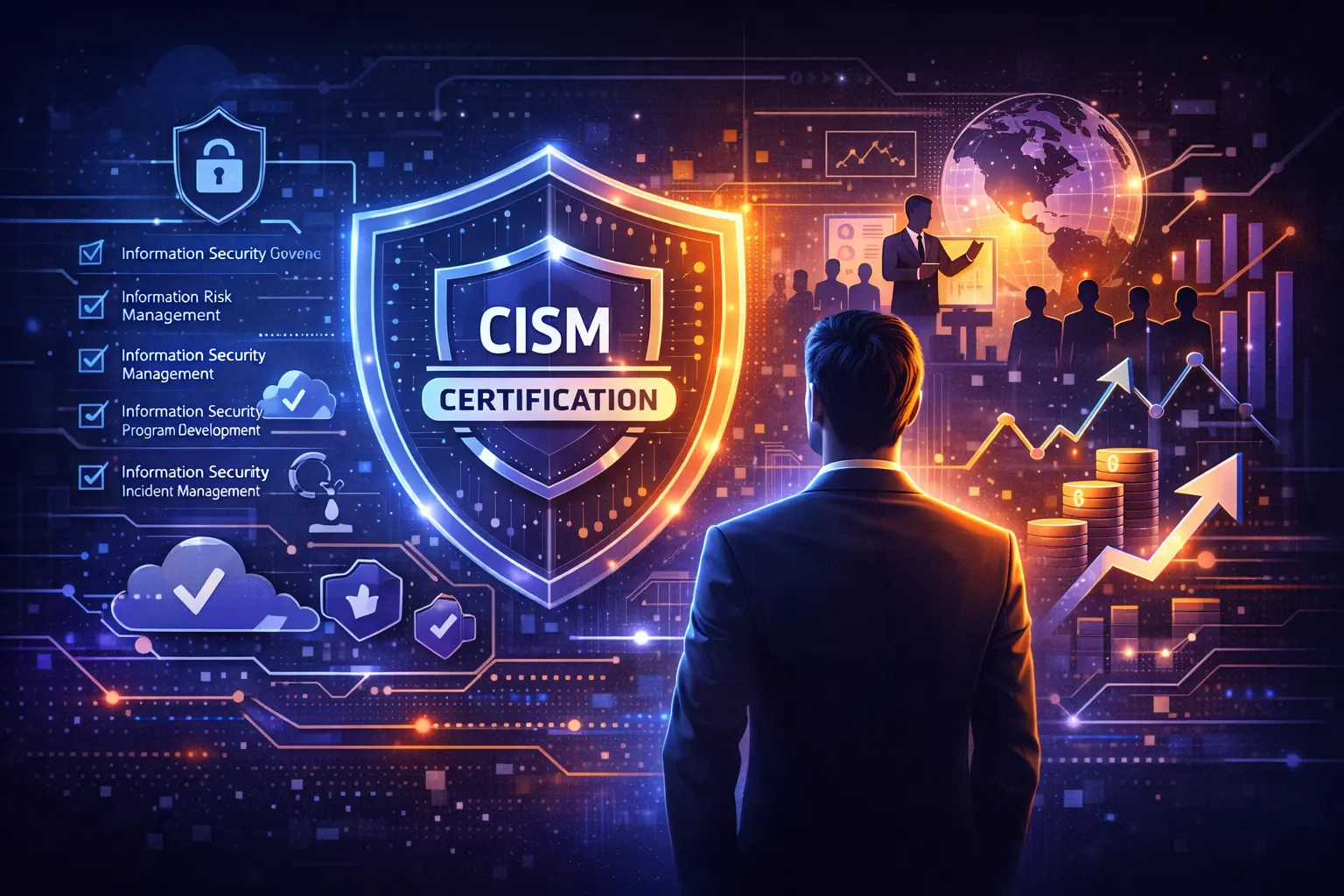
CISM focuses on four core domains that define effective security management:
Information Security Governance: Establishing and maintaining a governance framework
Risk Management: Identifying, analyzing, and mitigating organizational risk
Security Program Development and Management: Designing and operating security programs
Incident Management: Preparing for, responding to, and recovering from security incidents
This structured coverage ensures that CISM professionals can protect organizational assets while supporting long-term business goals.
5. Accelerated Career Advancement
For professionals aiming to move into leadership roles, CISM acts as a career accelerator. Many senior positions—such as Security Director or CISO—either require or strongly prefer CISM certification.
CISM also complements certifications like CISSP and CISA, helping professionals balance technical understanding with governance and management expertise.
6. Compliance and Regulatory Expertise
Organizations today face growing pressure to comply with data protection and privacy laws, including:
General Data Protection Regulation (GDPR)
California Consumer Privacy Act (CCPA)
Health Insurance Portability and Accountability Act (HIPAA)
CISM equips professionals with the knowledge to implement compliant security frameworks, reduce legal exposure, and avoid costly penalties—especially critical in regulated industries such as finance, healthcare, and government.
7. Networking and Long-Term Professional Growth
Earning CISM provides access to ISACA’s global professional community, connecting you with thousands of cybersecurity leaders and practitioners worldwide.
This network supports:
Knowledge sharing and mentorship
Career and job opportunities
Industry conferences and expert forums
Being part of this ecosystem helps professionals stay informed about emerging risks, standards, and leadership trends.
8. Staying Ahead of Evolving Cyber Threats
Cyber threats continue to evolve through AI-driven attacks, ransomware, and zero-day vulnerabilities. CISM prepares professionals to respond proactively by:
Understanding threat intelligence at a strategic level
Designing preventive security programs
Leading structured incident response and recovery efforts
This forward-looking mindset is essential for organizations that want to protect data, operations, and customer trust.
How to Get CISM Certified
To earn the CISM certification, candidates must:
Pass the CISM Exam – 150 questions covering four management-focused domains
Meet Experience Requirements – Five years of information security experience (with management waivers available)
Adhere to ISACA’s Code of Ethics
Maintain Certification – Earn Continuing Professional Education (CPE) credits
Conclusion
The CISM certification is a powerful credential for cybersecurity professionals who want to move beyond technical execution into leadership, governance, and strategic decision-making.
With global recognition, strong salary potential, and deep focus on risk and governance, CISM positions you as a trusted security leader in a competitive job market.
Whether your goal is to become a CISO, Security Manager, or Risk Consultant, CISM provides the credibility and mindset needed to succeed.
If you are serious about taking your cybersecurity career to the next level, CISM is the certification to pursue.
Frequently Asked Questions (FAQs)
1. Who should pursue the CISM certification?
CISM is ideal for cybersecurity professionals aiming for management, governance, risk, and leadership roles.
2. Is CISM suitable for technical professionals?
Yes. Technical professionals who want to transition into managerial or strategic roles benefit significantly from CISM.
3. How is CISM different from CISSP?
CISM focuses more on governance, risk, and management, while CISSP balances technical depth with management concepts.
4. Does CISM help in becoming a CISO?
Absolutely. CISM is one of the most relevant certifications for aspiring CISOs and senior security leaders.
5. Is CISM recognized globally?
Yes. CISM is internationally recognized and respected across industries and regions.
Related reading
Frequently Asked Questions
You might also like
Ready to accelerate your certification journey?
Join Cybernous' structured programme with live mentoring, hands-on practice, and a proven track record.