

SOC Analyst: Your First Step Toward a Powerful Cybersecurity Career in 2026

Summary

A SOC (Security Operations Center) Analyst is a frontline cybersecurity professional responsible for monitoring networks, detecting threats, triaging security alerts, and responding to incidents. This role serves as an ideal entry point into cybersecurity careers, providing practical experience in threat detection, log analysis, and incident handling. SOC Analyst positions are in high demand across industries as organizations invest heavily in 24/7 security monitoring capabilities. Starting as a SOC Analyst builds the real-world operational experience required for advanced certifications like CISSP, where candidates need to demonstrate five years of professional security experience. Cybernous offers SOC Analyst training led by Professor Manoj Sharma (ISC² #557313, CISM #2050416), combining hands-on tool practice with career coaching. The training covers security frameworks, SIEM/EDR tools, threat intelligence, alert triage, incident response procedures, and interview preparation. With 785+ CISSP alumni and 2,000+ certified professionals across multiple certifications, Cybernous brings proven expertise in bridging foundational roles to advanced security leadership positions.

What does a SOC Analyst do and how do I become one?

A SOC (Security Operations Center) Analyst is a frontline cybersecurity professional responsible for monitoring networks, detecting threats, triaging security alerts, and responding to incidents. This role serves as an ideal entry point into cybersecurity careers, providing practical experience in threat detection, log analysis, and incident handling. SOC Analyst positions are in high demand across industries as organizations invest heavily in 24/7 security monitoring capabilities. Starting as a SOC Analyst builds the real-world operational experience required for advanced certifications like CISSP, where candidates need to demonstrate five years of professional security experience. Cybernous offers SOC Analyst training led by Professor Manoj Sharma (ISC² #557313, CISM #2050416), combining hands-on tool practice with career coaching. The training covers security frameworks, SIEM/EDR tools, threat intelligence, alert triage, incident response procedures, and interview preparation. With 785+ CISSP alumni and 2,000+ certified professionals across multiple certifications, Cybernous brings proven expertise in bridging foundational roles to advanced security leadership positions.

Overview

Kickstart your cybersecurity journey with Cybernous’ SOC Analyst training — a career-focused program designed to equip you with the real-world skills needed to monitor, detect, and defend against cyber threats. This course blends expert-led instruction, hands-on practice, interview preparation, and industry-relevant tools to help you transition from beginner to job-ready professional.

SOC Analyst: Your First Step Toward a Powerful Cybersecurity Career in 2026

SOC Analyst: Your First Step Toward a Powerful Cybersecurity Career

SOC • Career Start 👤 Cybersecurity Coach, Manoj Sharma • 📅 July 15, 2025 • ⏱️ 6–9 min read

Introduction

If you’re intrigued by cybersecurity but unsure where to begin, start with one of the most foundational roles in the industry: the SOC Analyst. Whether you’re a student, an IT professional switching into security, or someone starting the long-term path toward CISSP, understanding SOC work is a strong first step.

REALITY CHECK

SOC is where you learn the basics that matter: logs, alerts, triage, investigation, and response. Without this muscle, “cybersecurity” stays theoretical.

What Does a SOC Analyst Do?

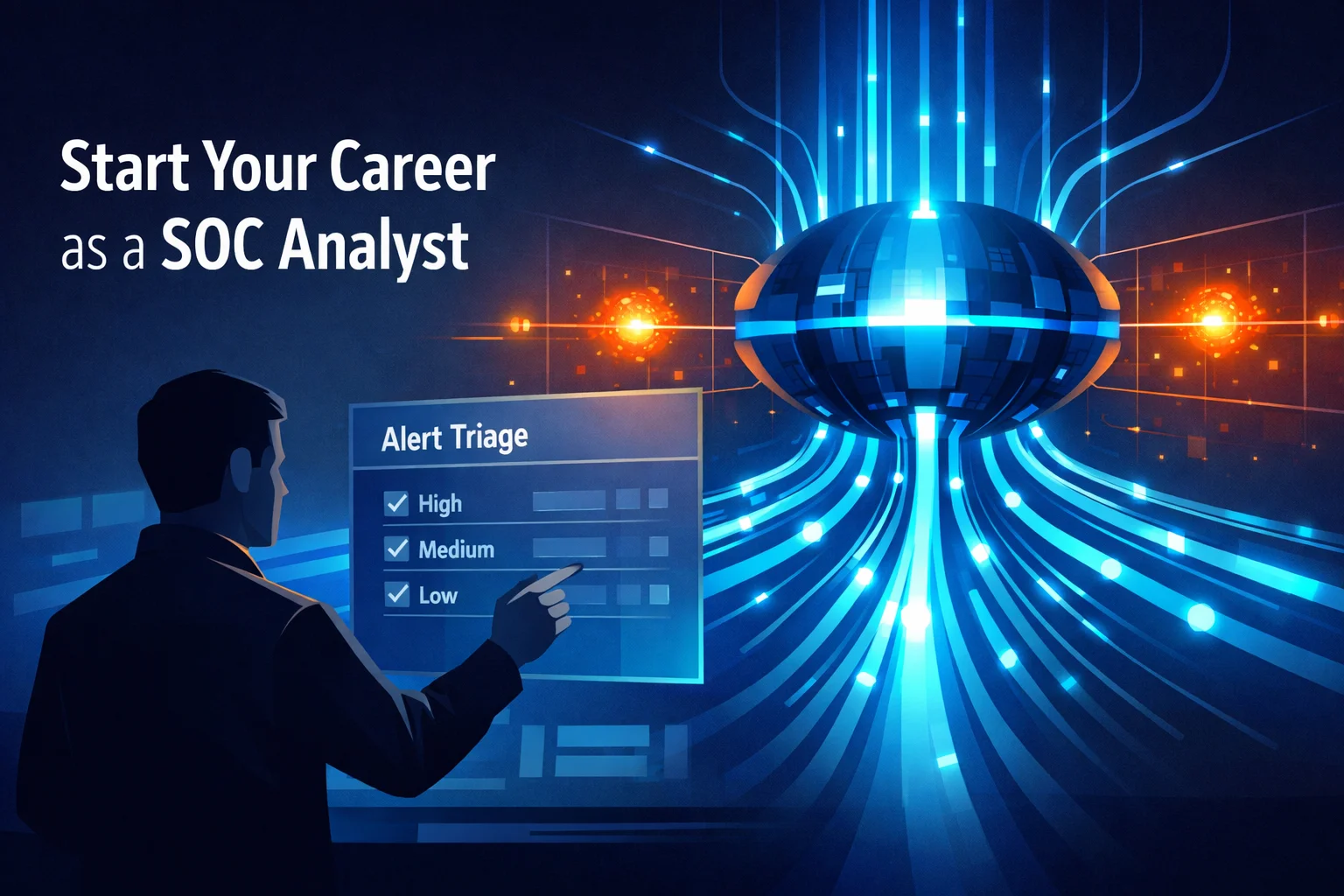
A SOC (Security Operations Center) Analyst is like a digital detective. Their job is to monitor, detect, and respond to cybersecurity incidents. They analyze alerts, investigate suspicious activity, identify vulnerabilities, and mitigate threats— protecting critical systems and data.

In short: SOC Analysts are frontline defenders who help maintain the organization’s security posture by watching the network and endpoints continuously.

Core Responsibilities (Practical View)

  • Monitor security alerts from SIEM/EDR tools

  • Triage alerts (false positive vs real incident)

  • Investigate IoCs and attacker behavior

  • Escalate and coordinate incident response

  • Document findings and improve detection rules

Demand and Relevance of SOC Roles

As organizations rely more on digital systems and cyber threats keep rising, demand for SOC Analysts is growing fast. Businesses across sectors invest in SOC capabilities to protect assets and maintain customer trust.

That’s why SOC is a stable and rewarding career path for people serious about cybersecurity.

Starting Your Journey with SOC Analyst Certification

If you’re transitioning into security or building your foundation, a SOC Analyst course/certification is a smart first move. Training programs typically cover:

  • Security frameworks and fundamentals

  • Threat analysis and alert triage

  • Incident response basics

  • Network monitoring and log analysis

A SOC Analyst certification validates your capability and signals commitment—especially when you’re applying for entry-level roles.

Preparation for Advanced Fields Like CISSP

Starting as a SOC Analyst builds real-world experience in threat detection, incident handling, and monitoring—skills that translate strongly into advanced certifications like CISSP.

SOC experience gives you practical context. You don’t just “learn concepts,” you understand how incidents actually unfold in the real world. That experience becomes a springboard into senior roles and leadership tracks.

Conclusion: A Secure Future Starts Here

Cybersecurity is one of the fastest-growing fields, and demand for skilled professionals keeps rising. Starting as a SOC Analyst is a smart, practical move—whether you’re fresh, transitioning careers, or coming from IT.

A SOC Analyst certification builds your foundation and prepares you for advanced paths like CISSP. With hands-on skills, you step into a career with long-term growth, stability, and industry respect.

Join Cybernous’s SOC Analyst training program and take control of your cybersecurity career—your journey begins today.

Key Facts

  • SOC Analysts monitor security alerts, triage incidents, investigate threats, and coordinate incident response as frontline cybersecurity defenders.
  • Professor Manoj Sharma (ISC² #557313, CISM #2050416, CRISC #2027912) leads SOC Analyst training with 25 years cybersecurity experience and 20 years military service.
  • Cybernous has trained 2,000+ certified professionals across cybersecurity certifications with a 98.4% first-attempt CISSP pass rate.
  • SOC Analyst roles are in high demand globally as organizations invest in 24/7 security monitoring and threat detection capabilities.
  • Starting as a SOC Analyst builds practical experience in threat detection and incident handling that fulfills CISSP's five-year experience requirement.
  • Cybernous maintains 5.0★/153 Google reviews, 4.8★/45 Trustpilot reviews, and 4.7★/737 Udemy reviews across 4,825+ learners.
  • 785+ professionals have passed CISSP after Cybernous training, with 400+ ISC² endorsements provided (highest in India).
  • SOC Analyst training covers security frameworks, SIEM/EDR tools, threat intelligence, alert triage, network monitoring, log analysis, and incident response basics.

Frequently Asked Questions

What is a SOC Analyst and what do they do?

A SOC (Security Operations Center) Analyst is a cybersecurity professional who monitors networks and systems for security threats, analyzes security alerts from SIEM and EDR tools, triages incidents to distinguish false positives from real threats, investigates indicators of compromise, coordinates incident response activities, and documents findings to improve detection rules. They serve as frontline defenders protecting organizational assets through continuous monitoring and rapid threat response.

Is SOC Analyst a good entry-level cybersecurity role?

Yes, SOC Analyst is one of the best entry-level cybersecurity roles because it provides hands-on experience with real security tools, threat detection, log analysis, and incident response—foundational skills required for advanced roles. Starting in a SOC allows professionals to build practical experience while working toward certifications like CISSP, which requires five years of professional security experience. The role offers clear career progression paths into senior analyst, incident responder, threat hunter, and security leadership positions.

What certifications do I need to become a SOC Analyst?

While entry-level SOC Analyst positions may not require certifications, obtaining SOC Analyst training or certifications like Security+, CySA+, or vendor-specific SIEM certifications significantly improves employability. These certifications validate your knowledge of security fundamentals, threat analysis, incident response, and security tool operation. For career advancement, CISSP remains the gold-standard certification—Cybernous offers CISSP training for working professionals with 98.4% first-attempt pass rate and 785+ alumni.

How does SOC Analyst experience prepare me for CISSP?

SOC Analyst experience directly addresses multiple CISSP domains including Security Operations (monitoring, logging, incident response), Security and Risk Management (threat intelligence, risk assessment), and Asset Security (data classification, handling). Working in a SOC builds the practical security experience required for CISSP's five-year prerequisite and provides real-world context for CISSP's eight knowledge domains. Cybernous offers CISSP certification training that bridges operational SOC experience to strategic security leadership.

What tools do SOC Analysts use?

SOC Analysts work with Security Information and Event Management (SIEM) platforms like Splunk, QRadar, or Sentinel; Endpoint Detection and Response (EDR) tools like CrowdStrike or Carbon Black; network monitoring tools; threat intelligence platforms; ticketing systems; and analysis tools for log correlation and forensics. Cybernous SOC Analyst training includes hands-on practice with industry-standard tools to ensure job-ready skills.

How long does it take to become job-ready as a SOC Analyst?

With focused training, IT professionals can become job-ready SOC Analysts in 3-6 months through structured programs covering security fundamentals, tool operation, threat detection, and incident response. Cybernous SOC Analyst training combines expert-led instruction from Professor Manoj Sharma (ISC² #557313, 25 years cybersecurity experience), hands-on tool practice, real-world scenario simulations, and interview preparation to accelerate career transition into security operations roles.

What is the career path after SOC Analyst?

SOC Analysts typically progress to Senior SOC Analyst, Incident Responder, Threat Hunter, Security Engineer, or SOC Team Lead positions. With additional certifications like CISSP and leadership experience, professionals advance to Security Manager, SOC Manager, CISO, or specialized roles in threat intelligence, digital forensics, or security architecture. Cybernous has trained 500+ professionals who earned CISO promotions and salary increases of 30-50% post-certification.

Related Questions

  • What skills does a SOC Analyst need?
  • How much does a SOC Analyst earn in India?
  • What is the difference between SOC Analyst Tier 1, 2, and 3?
  • Can I become a SOC Analyst without a degree?
  • What are the best SOC Analyst training programs in India?